
Pointer Variables
An address is a value, just like a number. So you can store it in a variable. A variable that stores an address is called a pointer: it points to another variable, which means it tells you where that variable is.
int age = 15;
int *p = &age;
Read the second line like this: "p is a pointer to an int, and it holds the address of age". We say that p points to age. The * in the declaration says that p is a pointer. The int before it says what kind of value is in the box it points to.
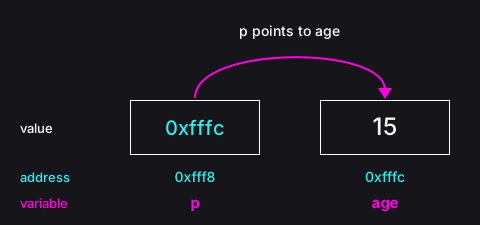
So the type of p is int *, "pointer to int". A pointer to a double has the type double *, and a pointer to a char has the type char *. Short names like p are common for pointers in small examples. C doesn't mind the spaces around the *: int *p, int* p and int * p mean the same. This course writes int *p.
A pointer is a variable too, so it has its own box with its own address. But what's in its box isn't 15. It's the address of age. When you print p with %p, you get the same number as for &age:
#include <stdio.h>

int main(void) {
    int age = 15;
    int *p = &age;
    printf("Address of age: %p\n", &age);
    printf("Value of p: %p\n", p);
    return 0;
}
This prints:
Address of age: 0xfffc
Value of p: 0xfffc
Common mistakes:
int *p = age;without&ends with the errorincompatible integer to pointer conversion initializing 'int *' with an expression of type 'int'; take the address with &. A pointer holds an address, not a number like 15. The end of the message even tells you the fix: take the address with&.- The type of the pointer must fit the type of the variable. After
double price = 9.5;, the lineint *p = &price;ends with the errorincompatible pointer types initializing 'int *' with an expression of type 'double *'. The address of adoublebelongs in adouble *.
Instructions
Start programming for free
2/11